

Insights
Sharing inspiration, insight and interesting ideas

A lot has been written about vision, drive, decisiveness, strategic thinking, and other important traits for effective leadership.
But there are three traits I believe are just as essential, yet rarely get the attention they deserve.
Let me share those with you.

When we talk about organisational culture, it’s easy to focus on what’s visible - the elements we can see, measure, and discuss openly. These include company values, mission statements, team structures, and how people interact daily.
But like an iceberg, what’s visible is only a small part of the whole.

In our pursuit of excellence and leadership, it's essential to continuously refine our approach to managing and developing our teams. One highly effective leadership style is coaching, which focuses on empowering team members to achieve their full potential.
Here are four coaching skills that will help develop a coaching culture within your team.

Imposter Syndrome has been described as self-doubt of intellect, skills, or accomplishments and is often experienced by high-achieving individuals.
Here are 10 strategies and insights you can start using right away to manage imposter feelings & self-doubt.

Imposter Syndrome - it sounds like a disease, doesn't it? And maybe it is. An epidemic of limiting beliefs, fear, and uncertainty.
In my view, self-diagnosing ‘imposter syndrome’ is dangerous - why? Because what we think is true becomes our truth.

I believe wholeheartedly in the importance of continuous growth and learning, especially when it comes to our careers and leadership. In this blog, we'll delve into the significance of reflection in leadership and how this powerful practice can pave the way for more effective and empathetic leaders.

How comfortable do you feel giving and receiving feedback?
I can tell you it’s tricky for most of the managers and leaders I coach 121 and is often a discussion point in team sessions.
If you work with other humans, then feedback is a part of your role and if you are a manager or leader then you have a responsibility to give effective and equitable feedback. However, these valuable exchanges often don’t happen as frequently as they could.
Feedback is important for career development, building relationships with colleagues, and enhancing performance.

Asking for feedback can be a bit intimidating because you're opening yourself up to possible criticism. Cultivating a positive mindset is key to overcoming the fear of feedback. It’s important to remember that no one is perfect, everyone has and will make mistakes, and there's always room for improvement. In this respect, you're the same as everyone else in your organisation. It takes courage to admit that you're not perfect. So, when you ask for feedback, you've already put yourself a step above the majority who don't.

Here’s a story about leadership in action.
I met a stranger at the gym which is unusual because when I enter the gym it’s headset on, minimal eye contact, I’m here to train!
This stranger managed to have a big impact on my training and mindset with just a few short interactions. I reflected on that and realised he demonstrated a powerful process that can be adopted by anyone who wants to get the best out of people around them, be it their team, peers or friends.
Leaders are everywhere, not just in the office. Sometimes they pop up when you least expect it.
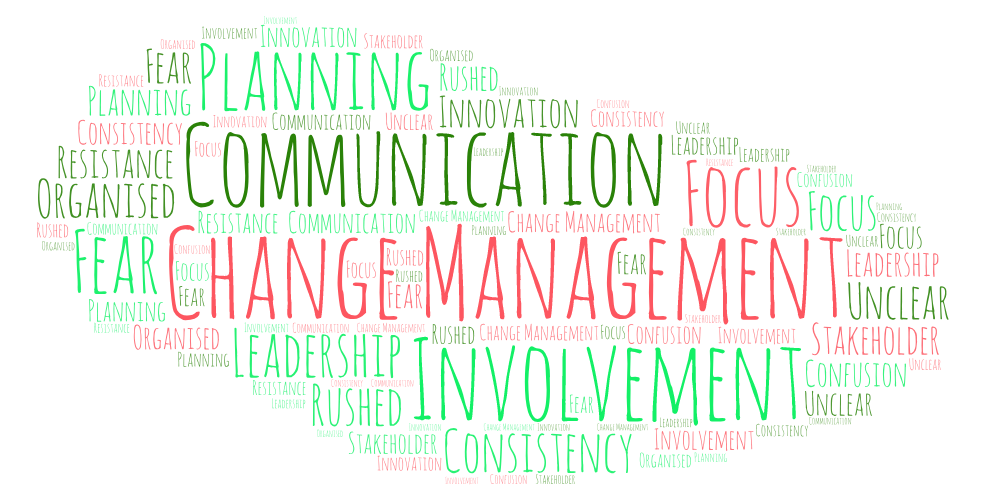
What are the key ingredients for successful change management?
The Human Capital Institute (HCI) and International Coach Federation (ICF) have partnered to research coaching cultures in organisations for the past 5 years. This year’s research (2018) focuses on change management and the role of coaching in change initiatives.
 Certified Professional Co-Active Coach
 International Coach Federation
 Organisation and Relationship Systems Coaching
 Somatic Trauma Therapy – Trauma Informed Coaching
 Leadership Circle Profile 360
 Career Change Coaching
 Professional Certified Coach
 A tree planted for every new client
Certified Professional Co-Active Coach
International Coach Federation
Organisation and Relationship Systems Coaching
Somatic Trauma Therapy – Trauma Informed Coaching
Leadership Circle Profile 360
Career Change Coaching
Professional Certified Coach
A tree planted for every new client
A tree planted for every new client
Certified Professional Co-Active Coach
International Coach Federation
Organisation and Relationship Systems Coaching
Somatic Trauma Therapy – Trauma Informed Coaching
Leadership Circle Profile 360
Career Change Coaching
Professional Certified Coach
A tree planted for every new client